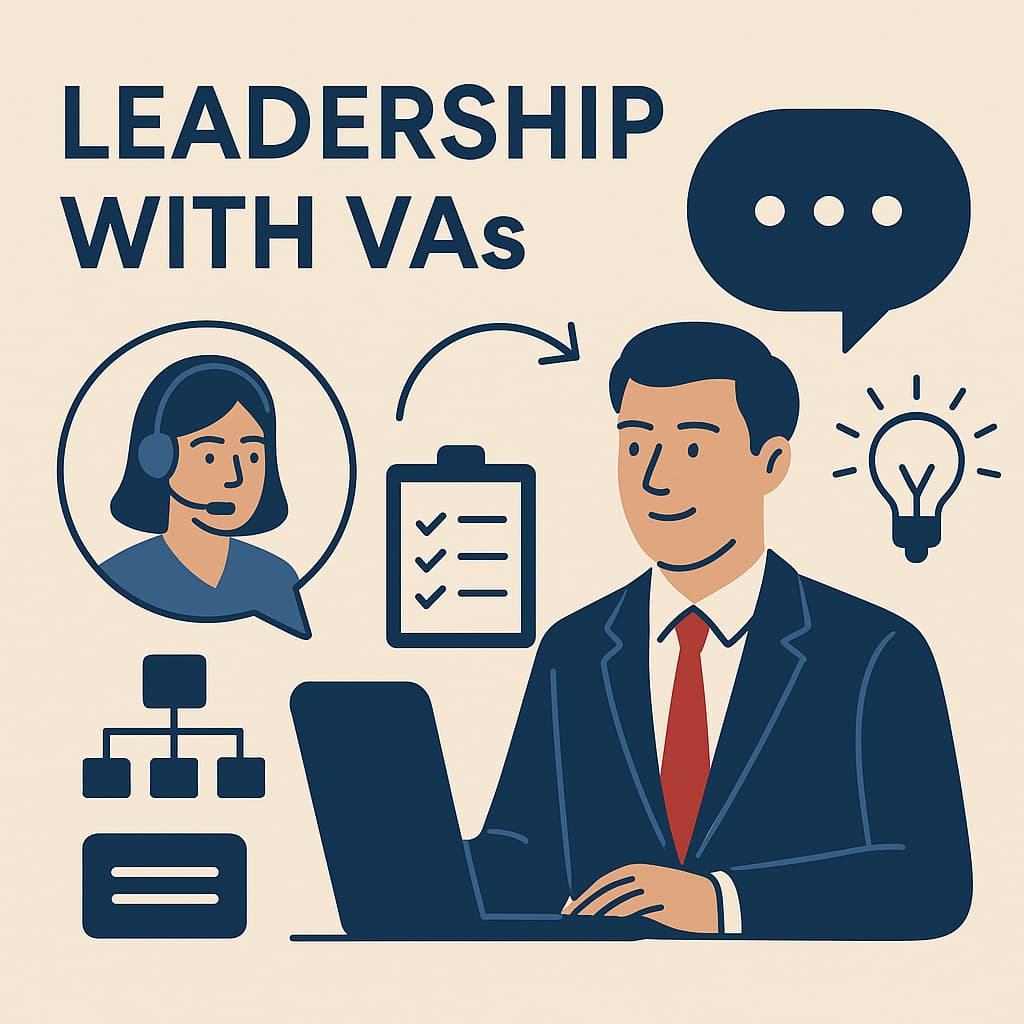
Leadership with VAs is becoming a defining part of how modern executives work. Remote teams, shifting schedules, and digital communication have pushed leaders to rethink how they stay organized and make decisions, and VAs have become central to this shift.
A strong VA does more than handle tasks. They shape how a leader communicates, organizes information, and sets priorities. Over time, the leader starts relying on simple systems instead of memory, clearer expectations instead of quick instructions, and calmer planning instead of endless reacting. The partnership creates a more focused, deliberate style of leadership that supports real growth.
Here, we look at how leadership with VAs is reshaping executive habits and why this change is helping leaders build healthier, faster, and more resilient teams.
Why Modern Leaders Rely on VAs More Than Ever
Leadership has shifted into a space where clarity and structure matter more than constant activity, and a VA plays a big role in helping executives make that shift. The support goes far beyond task completion. A VA quietly shapes how a leader approaches each day, how they think through decisions, and how they protect their time.
Working with a VA introduces a level of discipline that many leaders didn’t realize they needed. When tasks start moving to someone else, relying on memory becomes unreliable. Leaders begin building simple processes to keep everything organized. The workday becomes calmer, priorities become clearer, and the back-and-forth that usually slows teams down starts to fade.
Communication also changes. A VA can only deliver strong work when instructions are clear, so leaders learn to express what they want with more intention. Expectations are shared earlier. Decisions are documented instead of delivered in passing. This creates a steadier rhythm across the entire team and reduces the usual friction that comes from unclear direction.
The more a leader works with a VA, the more they see the benefits. They become less reactive, more deliberate, and far more focused. The partnership doesn’t only make the leader more productive. It makes them better at leading.
How VAs Strengthen Executive Decision-Making
Strong decision-making depends on clear information, and a good VA helps create the conditions for that clarity. Instead of forcing a leader to dig through emails, hunt for updates, or sort through scattered notes, a VA filters the noise and brings the essentials forward. Leaders stop guessing and start seeing the full picture faster.
With a VA gathering updates and highlighting anything that needs attention, a leader has a clearer runway. They’re not buried in the details, which means their mind is free to focus on the actual decision instead of the prep work behind it. This shift gives leaders space to think ahead, compare options, and make choices without the pressure of rushing through a cluttered inbox.
When routine tasks move off a leader’s plate, they gain mental room. That space becomes one of their strongest strategic tools. Instead of reacting to everything that comes in, they finally have the time to plan, anticipate, and lead with intention. It’s a small change on paper, but it transforms how leaders show up in their roles.
Why VAs Encourage Leaders to Let Go of Control
Letting go of tasks is one of the hardest parts of leadership, especially for someone used to doing everything alone. A VA makes that shift possible. As they consistently deliver, the leader begins to trust the partnership and starts handing over more responsibility. The more this happens, the easier delegation becomes.
With that trust comes a better understanding of where a leader’s time is truly useful. They start recognizing which tasks require their attention and which ones don’t. This naturally leads to healthier boundaries and a more focused schedule. There’s less scrambling at night to finish things that could have been handled earlier, and more time spent on the work that actually moves the business forward.
A VA also changes how leaders measure their own effectiveness. Busy days used to feel productive, even when the tasks weren’t important. Once a VA steps in, leaders see the difference between being active and being useful. They stop chasing every detail and begin directing their energy toward decisions, relationships, and strategy. The more they release, the stronger and steadier their leadership becomes.
The New Leadership Style: Collaborative, Transparent, and System-Driven
Working with a VA nudges leaders into a more collaborative rhythm. Information no longer sits in their heads or gets shared at the last possible minute. Instead, everything begins to flow through systems the VA can access, update, and maintain. That shift alone changes how leaders operate day to day.
As visibility increases, the leader starts sharing plans earlier and with more clarity. This creates a working style that feels more coordinated instead of one-directional. Projects move with fewer surprises because everyone knows what’s happening and what needs attention. The dynamic becomes less about giving orders and more about moving together.
Transparency plays a big part in this. When priorities and decisions are written down instead of spoken in passing, the whole team gains a clearer understanding of how work should progress. Expectations are easier to meet because no one is guessing. The leader also stops relying on memory or speed to keep things going. Documented workflows guide the day, which reduces pressure and frees the leader to focus on long-term thinking instead of constant catch-up.
How VAs Improve Team Culture From Behind the Scenes
A skilled VA doesn’t only support the executive. Their presence influences the larger team in subtle but meaningful ways. When a VA keeps the leader organized, that organization ripples across the company. Meetings start on time. Priorities remain steady. Communication feels more deliberate. This creates a more predictable environment, and a predictable environment helps teams feel grounded.
Because a VA often acts as the bridge between the leader and everyone else, communication becomes smoother. Messages are clear, follow-ups are handled, and important details stop slipping through the cracks. Workflows feel steadier because the VA helps translate the leader’s expectations into practical steps the team can follow.
Over time, the VA’s work habits become part of the culture. Their consistency, accuracy, and professionalism set a quiet standard. Without ever trying to take the spotlight, they model the kind of discipline and follow-through that encourages others to raise their own bar.
Why Leaders Who Work With VAs Scale Faster
Leaders who work well with VAs tend to grow more quickly because their attention shifts to work that actually moves the business forward. When a VA manages the administrative flow, the leader’s day becomes clearer. They have more time for strategy, deeper client work, and the kind of thinking that leads to growth. Their schedule stops feeling crowded, and their decisions become sharper.
A VA also removes the bottlenecks that come from trying to handle everything alone. Instead of waiting for the leader to approve small tasks or answer every question, the VA keeps projects moving. Work continues even when the leader is in meetings, traveling, or off the clock. Momentum builds, and the entire team benefits from the steady pace.
Another advantage is cost. Bringing in a VA gives leaders more capacity without committing to the expense of a full-time hire. It’s a practical way to expand the business while keeping operations lean. The leader gets leverage, not payroll strain, and that combination creates room for faster, healthier growth.
Leadership With VAs Is the Future
Modern leadership rewards clarity and intention, and VAs make both easier to maintain. They help leaders communicate with more precision, plan their time more deliberately, and build systems the whole team can rely on. Leadership with VAs is reshaping how executives work, not by adding complexity, but by creating focus.
This partnership encourages leaders to spend their time where it matters most. It reduces stress, strengthens decision-making, and brings more consistency to the entire organization. Leaders who embrace this model tend to build teams that move with purpose and maintain a steady rhythm, even during busy seasons.
The future belongs to leaders who can delegate well and trust the right support. A strong VA becomes a partner in the bigger picture, helping the leader stay clear-minded, organized, and effective. If you’re ready to experience what a well-supported leadership style feels like, I’m here to help you take the next step.