A strong Executive Assistant can change the way you lead, but only if you give the partnership structure. That’s where a 30-day delegation plan comes in. It gives you a clear, steady path to shift work off your plate without chaos, hesitation, or second-guessing. Instead of handing off tasks randomly, you build a system your EA can follow, refine, and eventually run without constant input from you.
This plan is designed for executives who want to reduce daily pressure, protect their time, and create a smoother rhythm with their EA. Over the next 30 days, you’ll move from basic handoffs to meaningful trust. By the end of the month, your EA will know your priorities, understand your working style, and manage parts of your workload with confidence.
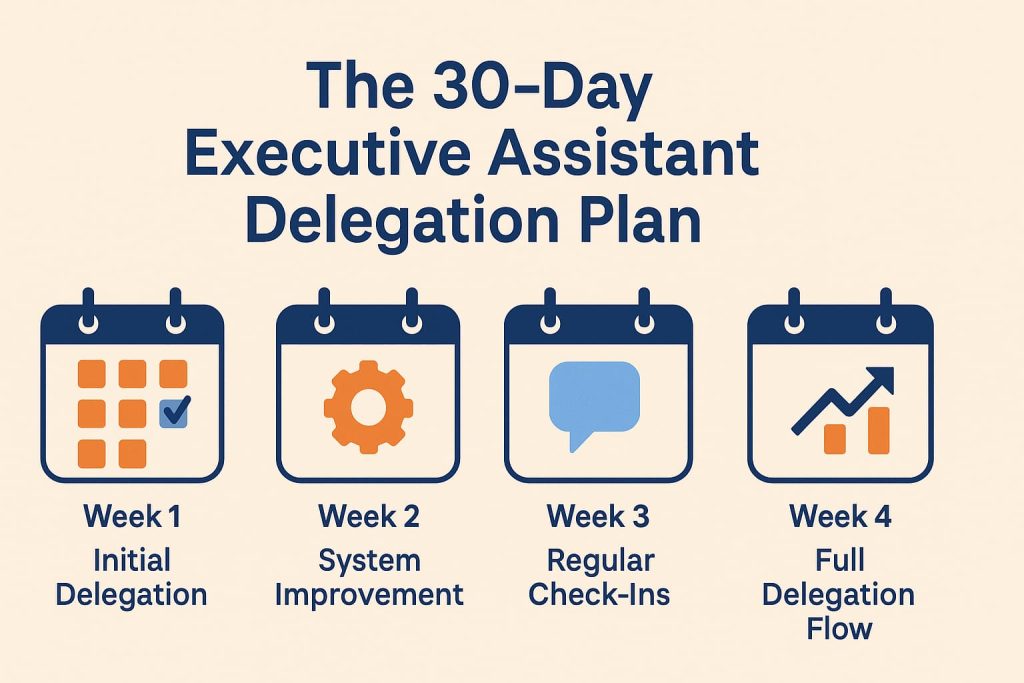
Week 1: Foundation and Clarity
The first week sets the tone for everything that follows. Your EA needs a clear view of your day before they can take anything over. This isn’t about impressing them with a perfect system. It’s about showing them the reality of your workload so they can help you sort it out.
Start by walking through your calendar together. Explain which meetings matter, which ones drain your time, and where you tend to get stuck. Move to your inbox and talk through the types of messages you’re juggling, the ones that always slow you down, and the ones you want your EA to eventually handle. The goal this week is understanding, not speed.
Once your EA sees how you work, they can begin spotting the pressure points you’ve probably ignored for years. That awareness becomes the base of your 30-day delegation plan and makes every step that follows easier and more effective.
Week 2: Early Delegation and Rhythm Setting
With the groundwork in place, this is the week where the 30-day delegation plan starts to feel real. Your EA now understands how you move through your day, so it’s time to hand over the first pieces of responsibility. Keep it simple, but make it meaningful enough to lighten your load.
Begin with tasks that require consistency rather than deep decision-making. These are usually the tasks that eat up your attention without adding much value. As your EA takes these on, you’ll start noticing pockets of breathing room. That breathing room is exactly what allows you to think more clearly and plan ahead.
This week is also where you establish your rhythm together. Short daily check-ins work far better than sporadic catch-ups. Use these moments to clarify priorities, discuss what’s coming up, and make sure you both see the day the same way. The goal isn’t to micromanage. It’s to stay aligned. When communication becomes predictable, delegation becomes easier and your EA becomes more confident in every step they take on your behalf.
By the end of Week 2, you should already feel a shift. Tasks move smoother. Your EA makes more sense of your world. You’re no longer carrying everything alone. This is the core of a healthy delegation partnership, and it sets you up for the next phase of the plan.
Week 3: Expanding Ownership and Refining Systems
By Week 3, the basics are already in motion. Your assistant understands your flow, you’re communicating regularly, and the early handoffs are running without friction. This is where the 30-day delegation plan starts to deepen. Instead of giving isolated tasks, you begin giving your EA ownership.
Ownership looks different from simple delegation. It’s not “do this task” anymore. It’s “own this area.” That might be your calendar, your inbox, a repeating process, a travel workflow, or part of your client communication. When your EA owns something, they manage the details, track the moving parts, and check in with you only on what truly needs your attention.
This is also a good moment to refine the systems you set up earlier in the month. What’s working? What still feels clunky? Your EA will spot inefficiencies before you do, so invite their suggestions. This collaborative refinement shapes the system into something sustainable instead of something you abandon when life gets busy.
As ownership grows, your role shifts from carrying the process to guiding it. You set direction, your EA handles the movement. This week builds the trust and structure that will carry you into the final stage of the plan.
Week 4: Full Delegation Flow and Long-Term Momentum
By the final week of your 30-day delegation plan, the partnership starts to feel natural. The friction is gone. Your EA already understands how you think, what you care about, and where your blind spots sit. This week is about bringing everything together and creating a delegation rhythm you can sustain long after the 30 days are over.
At this stage, your assistant should be running full processes without waiting for you to initiate every step. You’re still involved, but only where your voice genuinely matters. The everyday movement happens on their side. Your calendar stays clean, messages feel handled, and ongoing projects move without you constantly checking in. This is the moment when you finally see how much space a strong EA can create in your workday.
Use this week to strengthen communication norms. Decide how you want updates delivered, how you prefer summaries, and how often you want to review the bigger picture. These habits become the anchor that keeps the partnership aligned even when your schedule gets unpredictable.
The real goal of this final phase is momentum, the kind that doesn’t disappear after the month ends. You’re not only delegating tasks now. You’re delegating responsibility. You’re giving your EA the structure and trust they need to support you at a high level, and you’re stepping into a leadership role with more clarity and far less noise.
By Day 30, your workload feels lighter, your decisions feel clearer, and your time feels protected. That’s the impact of a well-built delegation system, and it only gets stronger from here.
Turning Your 30-Day Plan Into a Long-Term System
A 30-day delegation plan is only the beginning. Once you and your EA settle into a steady rhythm, you’ll start to see how much smoother your days become when the right support is in place. The real value isn’t the checklist you complete in a month. It’s the confidence you build together. It’s the clarity you gain when the noise falls away. And it’s the space you create for the work that actually drives your goals.
If you want a delegation plan built around your workload, your priorities, and the way you lead, I can help you shape it.
Ready to create your own system and step into a calmer, more focused way of working? Let’s build your delegation plan together.